Can AI satisfy human emotional needs?
With the continuous advancement of technology, the field of artificial intelligence has attracted more and more attention. Many topics related to AI have also frequently sparked heated discussions, such as the production of popular AI films and television works, the rise of AI majors as a highlight of university admissions, and the increasing risk of attempting to use AI for criminal purposes.
However, many netizens have raised the question that as AI becomes more and more popular in the future, can it meet human emotional needs?
Perhaps AI is so distant from us that it's difficult to directly imagine whether and how it can meet human emotional needs. Let's use an analogy: how did pet dogs evolve from wild animals to beings capable of meeting human emotional needs? Let's start with pet dogs today!
01. How do humans accept dogs to meet certain emotional needs?
There are over 700 million dogs in the world, meaning almost one in every ten people owns a dog. Based on the three basic members of a family, between one-third and one-half of humanity owns a pet dog, a "quasi-family member" who provides emotional companionship.


So, how do humans accept dogs to meet certain emotional needs? In fact, I have really studied this aspect in depth. The process of domesticating pet dogs is actually very similar to the process of AI evolving into a human emotional companion: it is also learning how to enter human life and become an important member of emotional companionship. This process is accompanied by two key processes: demand + learning
02. How to meet one of human emotional needs - motivation
Whether it can satisfy human emotions depends first on whether humans have the need and motivation to domesticate pets and AI.
Many people believe that dogs entered human life after the advent of civilization, that is, in the last 10,000 years since the beginning of the agricultural era. However, research has found that dog domestication may have begun as early as 30,000 years ago during the Paleolithic Age.
At that time, humans ate raw meat and drank blood, gathered and hunted, and some relatively docile gray wolves chose to cooperate with humans in a mutually beneficial manner. For example, when food was scarce, humans stored food and shared some with the wolves. In return, the wolves provided security and hunting services for humans.
Humans developed a need to domesticate them. Over time, humans increasingly intervened in wolf breeding, ultimately transforming wolves into more docile and obedient emotional companions—dogs. However, having a need is only the first step.
Dogs, as important companion animals for humans, are very different from other domestic animals, and this process is the second important factor: learning.
03. How to meet human emotional needs 2 - learning
AI learning and evolution are essential to becoming an emotional companion. I believe many people, after getting a dog, must have an important step: educating their pet dog.
Yes, whether it's teaching a dog some rules, such as defecating in a designated area, or teaching a dog to communicate with humans, typically it's about understanding human commands. Some dogs can even master hundreds or even more human commands. And in this process, the dog's learning is crucial.
In fact, after long-term adaptation, dogs have even evolved special biological mechanisms to adapt to humans, which are imprinted in their genes.
For example, an article previously published in Scientific Reports pointed out that dogs use facial expressions to communicate with humans.

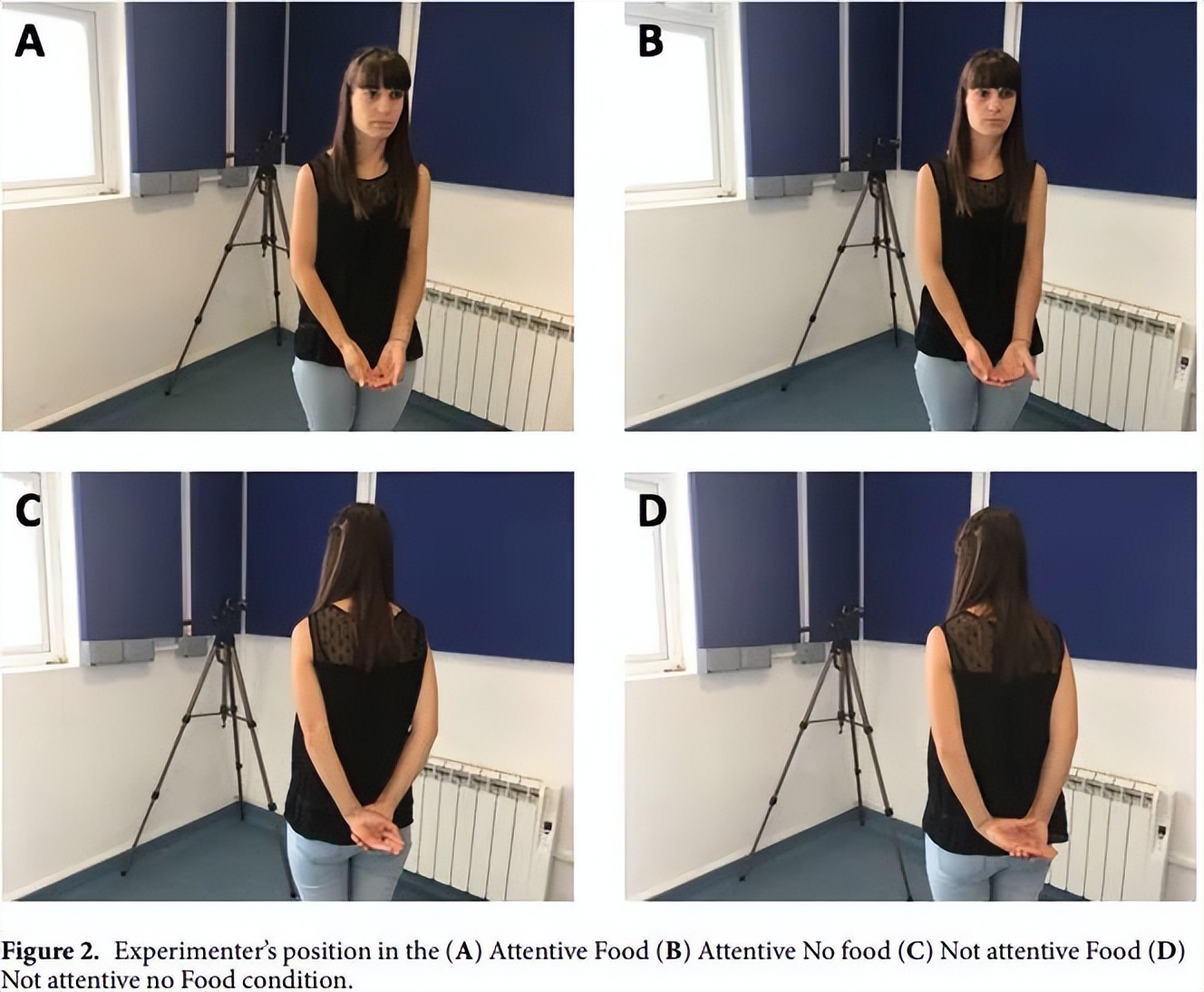
In the study, researchers recorded 24 dogs interacting with humans and summarized and classified the dogs' responses to human actions. The results showed that even if it was a complete stranger, the dogs would show different expressions in response, and if the person was facing the dog, their expressions were richer. In other words, the dogs were trying to communicate with humans using facial expressions. You must know that this is a very advanced skill that does not exist in most animals.
Other similar studies have also shown that compared with their close relatives, wolves, dogs have more facial muscles, especially eye muscles, which also allows them to display a wider variety of expressions and emotions.

Because of this, dogs are very successful as companion animals. They have entered hundreds of millions of homes and become important companions of humans.
Needs and learning are one of the fundamental factors that make dogs companion animals for humans. What about AI?
04. Can AI satisfy human emotional needs like dogs?
In fact, from dogs, we can see the possibility of future AI meeting emotional needs: demand + learning. Let's look at them one by one.
First, do we need AI? The answer is yes. There are several perspectives on this, which I'll try to explain.
1. The aging population and declining birthrate are serious issues, and more people are facing the reality of lack of companionship.
Aging and declining birthrates have become two of the most serious demographic issues facing the world today, sparking widespread online discussion and outcry every time news about these issues emerges. Currently, many countries around the world face severe aging populations, and birth rates in Asia and Europe continue to decline.
Another significant trend, parallel to the aging population, is the declining birthrate. These factors are likely to exacerbate negative population growth. Aging and the declining birthrate have left many elderly people without companionship, making it difficult to fully meet their emotional needs.

2. Although traditional views on love and marriage are changing, the human need for emotional and sentimental values remains unchanged.
Over the past few years, with the development of society and the widespread use of the internet, traditional concepts of love and marriage seem to be collapsing. Whether it's the gradually declining marriage rate, the rising divorce rate, or the increasingly later age of marriage and childbearing, these all indicate that traditional concepts of love and marriage are changing. Many people are entering a stage where they no longer want to be in a relationship, or even after marriage, they don't want to have children.
However, humans are social animals and inevitably need to express and communicate emotions. Therefore, the need for an interactive object is very important, and AI can also meet this need.
3. AI goes beyond pets and can do more
In fact, at this time, we still have a problem, that is, the things that companion animals such as dogs cannot do are also the advantages of AI.
The simplest one is that dogs can't communicate directly with humans through language, which is arguably one of the biggest obstacles. Speaking to our pet dogs is like playing the piano for them, but AI's ability to converse and communicate with humans is a huge advantage, fostering a sense of social engagement.
In addition, it provides 24-hour companionship, is available on call, does not require maintenance, and can meet more advanced interaction needs, such as allowing AI to make plans or even alarms.
In theory, AI can indeed meet human emotional needs. But given these needs, what about learning? This is a no-brainer. AI's greatest advantage is learning.
05. AI’s biggest advantage – learning
Dogs have gone through more than 30,000 years of domestication and learning to become what they are today. After all, the emergence and fixation of many traits require everything from epigenetics to genetic mutations, as well as strong artificial selection from generation to generation.
AI, however, faces none of these obstacles, especially as modern technology has greatly enhanced its capabilities. For AI to meet human emotional needs, it must first understand a person's emotions, behaviors, and habits, which requires enormous computing power. Every person is unique, and this uniqueness extends beyond just appearance to long-cultivated lifestyle habits and personality traits. These qualities cannot be captured intuitively; instead, they require observation, analysis, and conclusions drawn from numerous details.
For example, AI is already relatively mature in collecting and analyzing facial expressions, but the subtle facial expressions of many people are still ever-changing and may not necessarily reflect their true emotions. It may be a slight tremor of his finger, or a slight pause when his eyes glance away, or even just being silent for a while today, or he intentionally or unintentionally changing the furnishings of his home. These all reflect subtle changes in human emotions.
AI's analysis of these emotional details requires extremely complex computations. However, acquiring and calculating these details is the most fundamental way for AI to understand a person's emotions, and this requires and must rely on powerful computing power. Companies are already researching this area. As AI evolves into a companion, this is what we often say: the more computing power you have, the more productivity you have, and the more possibilities you have for the future.
In addition, a person's emotions cannot be limited to home, and a person cannot be locked in the house forever.
We travel abroad, on business trips, take long-distance trips, shop, and navigate countless other daily life scenarios. In fact, for most people, after adulthood, they probably spend less than half their time at home. This is when ubiquitous connectivity between humans and AI becomes essential.

Our emotional needs are there during breaks at work, at traffic lights, in supermarkets and squares, so we need this kind of ubiquitous connection between us and AI anytime, anywhere.
On the basis of meeting the above foundations, AI may be the core of emotional needs.
Understanding our emotions requires AI to understand us and truly become our confidants, unlike the widely used question-answering bots. We need something customized, truly our own. Therefore, machine learning, especially neural networks, is at the core; it holds the key to understanding ourselves.
Moreover, it is not just about understanding and emotion, but also about interaction. It is not about us talking to ourselves in front of the machine like in a tree hole, but about real companionship where we can chat with each other. This also requires artificial intelligence to be more intelligent and interact with us.
To some extent, if dogs, as companion animals, can satisfy our emotional needs, then artificial intelligence can certainly do the same. Technological development is crucial and fundamental to this. On this basis, how to use technology for good, and how to guide AI, which already possesses human emotions, to do the same, may also be a question we need to consider in the future. After all, AI may be a mirror for us, learning from us.